
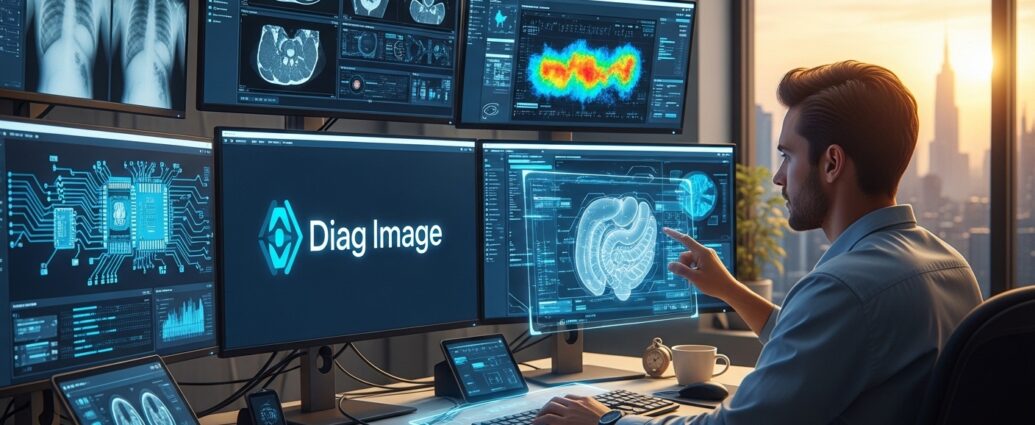
In a bustling tech hub in San Francisco, a team of engineers huddled over screens, debating the nuances of a new diagnostic tool. At the center of their discussion was the “diag image”—a seemingly simple visual, yet one with transformative potential across industries. For these innovators, understanding how to interpret, utilize, and optimize diag images wasn’t just technical—it was a gateway to smarter decisions and faster problem-solving.
The term “diag image” refers to diagnostic imagery used in various fields, from software debugging to medical imaging. Its essence lies in translating complex data into a visual format that is intuitive, accurate, and actionable. While the concept might appear niche, its implications are vast, touching everything from product design to healthcare diagnostics.
The Evolution of Diag Image Technology
The journey of diag images is intertwined with advances in computing and imaging technologies. Early diagnostic visuals were rudimentary, often limited to simple screenshots or static charts. As software systems grew more complex, engineers and analysts realized the need for dynamic visuals capable of conveying real-time data.
In medical contexts, diag images evolved even more dramatically. Consider MRI and CT scans: these are not mere photographs but highly sophisticated diagnostic images capturing layers of internal structures. They allow doctors to detect anomalies that were previously invisible, significantly enhancing patient outcomes. Similarly, in the software realm, diag images help developers identify bottlenecks, system errors, and performance irregularities that textual logs alone cannot reveal.
Real-World Applications of Diag Image
The utility of diag images extends far beyond theoretical discussions. In automotive engineering, diag images generated from sensors provide real-time feedback on engine performance, fuel efficiency, and safety system alerts. Mechanics and engineers rely on these visuals to diagnose problems before they escalate into costly repairs.
In IT and software development, diag images serve as a window into system health. A well-crafted diag image can pinpoint memory leaks, network congestion, or software conflicts, allowing teams to preempt downtime and maintain optimal performance. This visualization fosters collaboration across teams, bridging gaps between engineers, managers, and stakeholders.
In healthcare, the role of diag images is even more critical. Radiologists analyze complex imaging to detect tumors, fractures, or neurological issues. The clarity and precision of these images can mean the difference between early intervention and delayed treatment. With AI-assisted diagnostic imaging, these visuals are becoming smarter, highlighting areas of concern automatically and reducing human error.
Anatomy of an Effective Diag Image
Creating a diag image that is both informative and actionable requires attention to several key factors.
| Factor | Description |
|---|---|
| Accuracy | Ensures the data representation aligns with real-world conditions. |
| Clarity | Minimizes clutter and emphasizes critical information. |
| Context | Provides situational insight to interpret what the image depicts. |
| Real-Time Updates | Reflects ongoing changes, especially important in software and medical use. |
| Accessibility | Enables diverse teams to understand and act on the data effectively. |
Each element contributes to the effectiveness of a diag image. For instance, an overly complex visual may overwhelm a technician, while a simplified version might omit critical details. Striking the right balance ensures the diag image fulfills its purpose: fast, informed, and reliable decision-making.
Integrating Diag Image into Workflow
The adoption of diag images is not simply a matter of software installation; it requires strategic integration into workflows. Organizations often begin by identifying areas where visual diagnostics can yield measurable benefits. In software, this might be monitoring server performance. In manufacturing, it could be quality assurance processes on the assembly line.
Training is equally important. Teams need to understand not only how to read diag images but also how to interpret subtleties, such as color gradients or temporal changes. Advanced platforms now allow interactive diag images, where users can zoom, filter, and overlay multiple data sets, creating a multidimensional understanding of complex systems.
Future Trends in Diag Image Technology
The future of diag image technology is bright and rapidly evolving. Artificial intelligence and machine learning are enhancing image analysis, enabling predictive diagnostics that anticipate issues before they occur. In healthcare, AI-driven diag images may identify early signs of diseases that human eyes might miss. In technology and engineering, predictive visual diagnostics could reduce system failures and enhance efficiency.
Another emerging trend is augmented reality (AR). Imagine a mechanic viewing a diag image overlaid on an engine in real time or a surgeon analyzing a 3D diag image projected above a patient. These applications demonstrate how diag images are transcending traditional screens, becoming immersive tools that transform understanding and action.
Conclusion
Diag images are far more than technical visuals—they are instruments of insight, precision, and efficiency. Across industries, their adoption has transformed how professionals approach problem-solving, decision-making, and innovation. Whether in software debugging, automotive engineering, or medical diagnostics, the diag image represents a bridge between raw data and actionable knowledge.
As technology advances, the ability to harness diag images effectively will be a defining skill for leaders and innovators. Those who master this tool will not only see more clearly but will act more decisively, turning complex challenges into opportunities for growth and impact.