
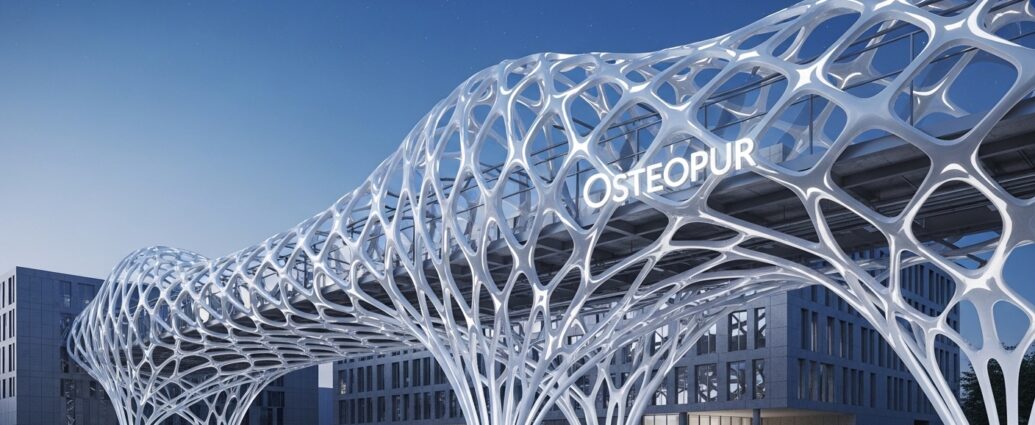
Every industry has a moment when progress stops being loud. Instead of dramatic breakthroughs, change becomes quieter, more deliberate, and far more intelligent. Osteopur belongs to this quieter evolution. It is not a concept born from hype or trend-chasing, but from a deeper understanding of how strength, efficiency, and sustainability intersect in modern systems.
In boardrooms, research labs, and design studios, professionals are rethinking what durability truly means. It is no longer only about resistance or mass, but about balance, longevity, and adaptability. Osteopur emerges in this space as a guiding idea—one that reshapes how we think about structural intelligence in both physical and conceptual frameworks.
Understanding Osteopur in a Modern Context
At its core, osteopur reflects a philosophy of optimized strength. The term is increasingly associated with systems that mirror biological efficiency, where resilience is achieved without excess. Much like natural structures that remain strong despite minimal material use, emphasizes purposeful design rather than brute force.
This concept resonates with entrepreneurs and technical leaders who understand that efficiency is not a compromise. In engineering, product development, and even organizational design, represents a move toward systems that are lean, responsive, and inherently durable.
Why Osteopur Matters to Innovators and Founders
Founders often operate under constant pressure to scale without breaking what already works. Ostopur aligns naturally with this challenge. It promotes the idea that systems should grow stronger through thoughtful reinforcement rather than uncontrolled expansion.
For innovators, becomes a framework for decision-making. It encourages questioning whether complexity adds real value or simply weight. This mindset is increasingly critical in markets where agility determines survival and long-term relevance.
The Real-World Relevance of Osteopur Principles
The influence of osteopur is visible across multiple industries. In product design, it supports materials and structures that deliver maximum performance with minimal waste. In technology, it echoes in software architectures built for stability under pressure rather than rapid patchwork fixes.
Even in leadership models, thinking can be observed. Organizations designed with clear roles, distributed strength, and adaptive frameworks often outperform those relying on rigid hierarchies. The principle remains consistent: strength is most effective when intelligently distributed.
Osteopur and Sustainable Performance
Sustainability is no longer a branding exercise; it is an operational necessity. Osteopur fits naturally into this reality because it values longevity over short-term gains. Systems inspired by are designed to last, reducing the need for constant replacement or repair.
This approach benefits not only the environment but also financial performance. Durable systems reduce long-term costs, improve reliability, and enhance trust among stakeholders. Osteopur therefore becomes a bridge between ethical responsibility and commercial logic.
How Osteopur Shapes Decision-Making
Adopting osteopur thinking changes how decisions are made at every level. Leaders begin to prioritize structural integrity over speed. Designers focus on load distribution rather than surface aesthetics alone. Engineers ask how a system will behave after years of stress, not just during initial deployment.
This shift does not slow innovation. Instead, it refines it. Oseopur-driven decisions often result in fewer failures, smoother scaling, and more predictable outcomes—qualities that matter deeply in high-stakes environments.
Comparative Perspective: Traditional Systems vs Osteopur Thinking
| Aspect | Traditional Approach | Osteopur-Oriented Approach |
|---|---|---|
| Design Philosophy | Maximum material and redundancy | Optimized strength distribution |
| Scalability | Expansion through addition | Growth through reinforcement |
| Sustainability | Reactive and resource-heavy | Proactive and efficient |
| Failure Response | Repair after breakdown | Prevention through structure |
| Long-Term Cost | High maintenance | Reduced lifecycle expense |
This comparison highlights why is gaining attention among strategic thinkers. It does not replace traditional methods entirely but refines them into something more resilient and future-ready.
Osteopur as a Cultural Shift
Beyond systems and structures, osteopur reflects a cultural evolution. Teams influenced by this mindset value clarity, intentionality, and shared responsibility. Instead of relying on individual heroics, strength is distributed across processes and people.
This cultural application is particularly relevant in fast-growing organizations. When growth outpaces structure, fragility appears. Ostepur offers a counterbalance by encouraging leaders to strengthen foundations before reaching upward.
The Future Trajectory of Osteopur
As industries continue to face uncertainty, the demand for resilient systems will only increase. Osteopur is positioned not as a passing concept but as a long-term philosophy. Its adaptability allows it to integrate with emerging technologies, evolving markets, and shifting societal expectations.
Future applications may expand into areas such as smart infrastructure, adaptive manufacturing, and organizational design frameworks. What remains constant is the core principle: strength achieved through intelligence rather than excess.
Conclusion
Osteopur represents a quiet but powerful redefinition of what it means to build for the future. It challenges outdated assumptions that more is always better and replaces them with a vision of purposeful resilience.
For entrepreneurs, tech leaders, and founders, offers more than a concept—it offers a lens. A way to evaluate systems, strategies, and structures through the question of endurance. In a world that rewards not just speed but staying power, stands as a reminder that the strongest systems are often the most thoughtfully designed.